


My Fish Shop! - Seafood Tycoon
Supercent, Inc.
I went into My Fish Shop! - Seafood Tycoon expecting a lightweight arcade game, and that is exactly where it works best. It gives me a small seafood business to manage, turns fishing into a simple source of stock, and lets me build a relaxing routine around serving customers. The appeal is not deep simulation; it is the quick satisfaction of collecting, selling, upgrading, and watching a modest operation become more efficient.
That distinction matters. This is a game I can open for a short break, make a few decisions, and leave without feeling that I have abandoned a complicated empire. At the same time, the idle structure means it is not designed for players who need constant action or a detailed management challenge. My overall view is positive: it is an approachable arcade tycoon with a pleasant loop, but its simplicity will determine whether it stays installed.
How the fishing shop loop feels in practice
The central idea is easy to understand. I fish, bring seafood into the business, and use the results to keep the shop moving. The combination of fishing and retail gives the game a little more personality than a standard idle title where the source of income is abstract. Even when the decisions are straightforward, the connection between gathering products and selling them makes progress feel visible.
I particularly like that the game does not ask me to learn a complicated rule set before I can enjoy it. The store summary describes it as an idle fishing simulator, and that is a fair description of the rhythm: progress continues through repeated actions and management choices rather than demanding precise controls or long sessions. It is the kind of arcade game I can understand almost immediately, which makes it suitable for casual players and younger users.
The strongest part of the design is the short feedback cycle. A successful fishing action has a practical purpose because it supports the shop. Selling is not just a separate mini-game layered on top; it is part of the same progression idea. I am always working toward a more productive business, even if the individual steps remain simple.
Related News






There is also a useful mental shift between active and passive play. During an active session, I can focus on collecting and improving the operation. When I only have a moment, the idle structure makes the game easier to return to. That flexibility is more important than it sounds. Many arcade games are enjoyable only while I am holding the phone, whereas this one is built around checking progress, making a few choices, and coming back later.
Why the shop theme gives the game its identity
Fishing alone could have made this a basic collection game, but the shop gives each catch a reason to exist. I am not simply gathering items for a counter; I am trying to support a small business. That theme makes the progression easier to follow and gives the game a friendlier tone than a purely competitive arcade experience.
It also creates a clear use case for short daily play. I can imagine opening it while waiting for a coffee, checking what has accumulated, handling the next round of business, and closing it before the break is over. The game does not need to replace a longer session-based title. Its strength is fitting into the gaps between other activities.
Gallery
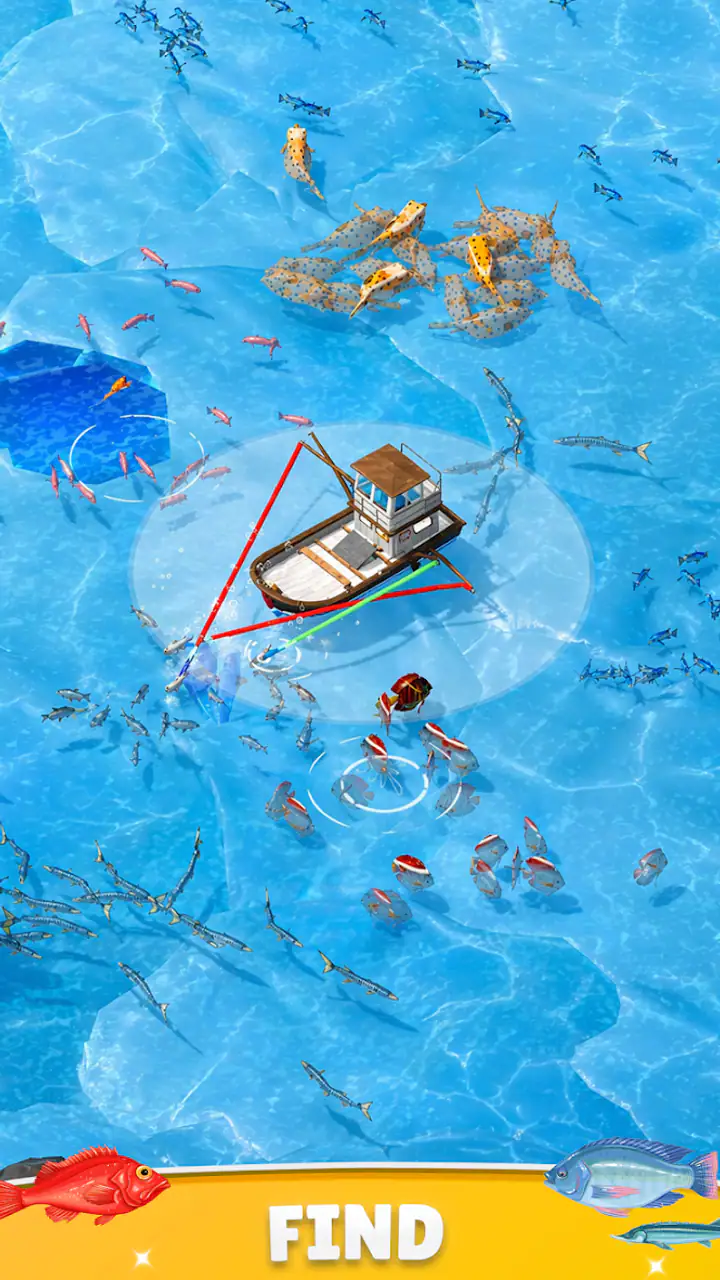
For that reason, I would not judge it by the standards of a full fishing simulator. Players looking for realistic equipment, detailed environments, or demanding technique should look elsewhere. Here, fishing is the front end of a compact tycoon loop. The shop is the destination, and the arcade presentation keeps the route uncomplicated.
Progression choices that reward a little patience
One practical lesson I took from playing is that idle progress is more useful when I treat it as part of a cycle rather than something to rush through. I get more from the game when I let the business build momentum, return at sensible intervals, and spend improvements with a plan instead of reacting to every small gain.
That does not turn the game into a complex strategy title, but it does give me a better way to play. If I spend everything immediately, the next session can feel like a series of tiny resets. If I think about which improvement will make the whole loop smoother, the same simple actions feel more connected. This is one of the less obvious strengths of the format: the game is easy, yet it still rewards players who organize their sessions.
I also found that the fishing and shop sides should be viewed together. Focusing only on obtaining more seafood misses the point, because the value of that activity comes from how it supports the business. Likewise, concentrating only on shop growth makes the fishing element feel like a chore. The most satisfying approach is to alternate between both sides and keep the whole operation moving.
Where the experience becomes repetitive
The same accessible loop that makes the game welcoming can eventually become its main weakness. Repeated fishing, selling, and upgrading is comfortable, but players who need frequent surprises may find the routine thin. The game is better at providing a dependable habit than at delivering dramatic changes from one session to the next.
I would especially hesitate to recommend it to someone who wants a tycoon game with intricate staffing, supply chains, pricing decisions, or a large set of interacting systems. The seafood setting suggests a deeper simulation than the arcade format actually promises. That is not a flaw by itself, but expectations matter. This is a simplified business fantasy, not a detailed economic sandbox.
The idle design can also reduce urgency. When progress is allowed to continue in the background, there is less pressure to master every action immediately. For some players that is relaxing; for others it can make the active parts feel less meaningful. I enjoyed the freedom, but I can see why a player who wants constant challenge might lose interest after the novelty of the shop wears off.
Another point to consider is the presence of in-app purchases. The game is free to play, while its optional purchases range from $0.99 to $49.99 per item. That broad range means I would approach spending carefully. The sensible way to enjoy this kind of game is to decide in advance whether I am happy with the free progression and treat purchases as optional convenience rather than a requirement for having fun.
In my view, the purchase structure is less concerning when I use the game as a short, casual diversion. I am not entering it expecting a premium, one-time experience, so I accept that monetization is part of the format. Still, anyone who dislikes idle games built around optional spending should think twice before committing time to it. The free entry is inviting, but it does not change the fact that the game is designed around ongoing progression.
Who will get the most from it
This is a good fit for someone who wants a friendly arcade tycoon game with a clear theme and low learning curve. I would recommend it to players who enjoy watching a small operation grow, like returning to a game several times throughout the day, and prefer progress systems that do not require intense concentration.
It is also a reasonable choice for families because the content rating is Everyone. That does not mean every child will enjoy the same pace, but the presentation is aimed at broad accessibility rather than mature drama or complicated competitive play. Adults who want something calm between demanding games may find the same appeal.
The game is less suitable for players who want fishing realism, high-skill arcade controls, or a story with substantial character development. It is also not my first choice for someone seeking a long uninterrupted session. Compared with a traditional arcade game, it offers less moment-to-moment intensity. Compared with a full tycoon game, it offers fewer management layers. Its best position is between those two alternatives.
That middle ground is useful. A conventional fishing game may ask me to spend every minute actively aiming, timing, or exploring. A deeper tycoon title may require spreadsheets of decisions and longer planning. This game removes much of that pressure and keeps the theme intact. If I want a gentle business loop rather than a demanding specialist experience, it is the better option.
Practical details before installing
Supercent, Inc. is the developer behind the game. It is available free of charge, supports devices running Android 6.0 or later, and is currently listed at version 5.2.0. Those details make it accessible to people using older compatible Android phones, although the actual comfort of play will still depend on the device and personal preferences around screen size and performance.
The game has reached over 500 thousand installs and holds a 4.4 average from around 11 thousand ratings. I read that as a sign that the straightforward concept is connecting with a sizable casual audience, while remembering that a strong average cannot guarantee that every player will enjoy the idle pacing. The listed release date is July 25, 2025, so the title also feels like a relatively recent entry for anyone browsing newer arcade games.
One question many players will have is whether they need to spend money to understand the game. My answer is no: the free download is enough to try the complete basic idea and decide whether the fishing-shop loop suits you. The more important question is whether you enjoy gradual progress. If you do, you can approach purchases cautiously. If you do not, paying more will not solve the underlying pacing issue.
Another practical question is whether it works for very short sessions. Yes, that is one of its natural strengths. I can check the shop, handle available progress, and leave without needing to remember a complicated quest or reach a distant checkpoint. The trade-off is that short sessions may feel similar to one another, so the game works best when I see it as a recurring routine rather than a sequence of major events.
Players may also wonder whether it is better than other idle games. I would say it is better for someone who wants a specific fishing-and-seafood identity instead of a generic business theme. It is not automatically better for someone who wants the deepest upgrade tree or the most varied activity. The choice depends on whether the setting and relaxed loop matter more to you than mechanical complexity.
Small habits that make the loop more enjoyable
I found three habits particularly useful. First, I would avoid treating every opening as a race to spend immediately. Taking a moment to consider what will improve the next complete cycle makes the business feel more coherent. Second, I would alternate attention between fishing and the shop instead of repeating only one side. The game is at its best when both parts support each other.
Third, I would set a personal limit around optional purchases before playing for a longer period. Idle games can make small conveniences feel tempting because progress is always visible. Deciding what the game is worth to me in advance keeps the focus on the enjoyable routine rather than on chasing a faster result.
A fourth habit is to use it as a companion game rather than the only game on the phone. Its low-pressure structure makes it easy to check between other activities, but its repetition is more noticeable if I expect it to provide all of my entertainment. Pairing it with a more active arcade game or a story-driven title gives it a clearer role and makes its calm pace feel intentional.
My verdict after settling into the routine
My Fish Shop! - Seafood Tycoon succeeds because it understands its scale. It does not need to be a realistic fishing simulator or a complex business management game. Instead, it offers a readable arcade loop in which catching seafood and running a shop belong to the same idea. That makes progress easy to understand and gives casual play a pleasant sense of purpose.
Its limitations are equally clear. The repetition may wear down players who need constant novelty, and the idle structure will not satisfy anyone searching for demanding controls or detailed economic decisions. The optional purchase range also deserves a cautious approach, especially for players who are sensitive to monetization in free games.
I recommend it as a gentle, easy-to-learn time filler for players who enjoy watching a small seafood business grow. I would skip it if your ideal fishing game depends on realism, exploration, or skill-based action. For everyone in between, the free entry makes trying it a reasonable decision. Give it a few sessions, pay attention to whether the shop loop feels satisfying rather than merely repetitive, and you will know quickly whether this particular tycoon style belongs in your regular rotation.
FAQs for My Fish Shop! - Seafood Tycoon
What is My Fish Shop! - Seafood Tycoon about?
My Fish Shop! - Seafood Tycoon is a casual management game in which you build and operate your own seafood business. You begin with a small shop and work toward expanding it by serving customers, preparing fish products, improving equipment, and managing the flow of your store. Its simple controls and progression-focused gameplay make it accessible for short play sessions.
Is My Fish Shop! - Seafood Tycoon free to download and play?
The game can generally be downloaded for free, but it may include optional in-app purchases. These purchases can provide extra currency, boosters, upgrades, or other conveniences that speed up progress. You can usually play without spending money, although some waiting periods or progression limits may feel more noticeable if you choose not to buy optional items.
Does the game require an internet connection?
My Fish Shop! - Seafood Tycoon may work for many basic activities without a constant internet connection, depending on the version installed and the device platform. However, an internet connection can be required for advertisements, cloud-related features, updates, purchases, or restoring progress. For the most reliable experience, connect to the internet when launching the game or using online features.
Is My Fish Shop! - Seafood Tycoon suitable for children?
The game is generally suitable for players who enjoy light, non-violent business and time-management games. Its colorful presentation and straightforward objectives make it easy to understand, but parents should still review the age rating and available purchase settings. Because advertisements and optional in-app purchases may be present, parental controls are recommended on devices used by younger players.
What should I know about gameplay and progression before downloading?
Progress is based on repeatedly serving customers, improving your seafood shop, and unlocking better tools or business opportunities. The early stages are usually easy to follow, while later progress may require more patience, careful use of resources, or repeated sessions. Players looking for a relaxed upgrade-and-management experience will likely enjoy it, but those expecting a deep economic simulator may find the mechanics fairly casual.
Pros
- Simple controls make the shop easy to manage on mobile.
- Short sessions suit quick play during breaks.
- Unlockable seafood and equipment keep progression rewarding.
- Bright cartoon visuals make the game friendly for all ages.
- Offline play lets you manage the shop without a constant connection.
Cons
- Upgrade costs can become expensive as the shop expands.
- Repeated serving and restocking tasks may feel monotonous over time.
- Some progress may depend heavily on watching ads or spending currency.
- Small screen elements can make precise taps occasionally frustrating.
- The game offers limited depth for players seeking complex tycoon mechanics.


